
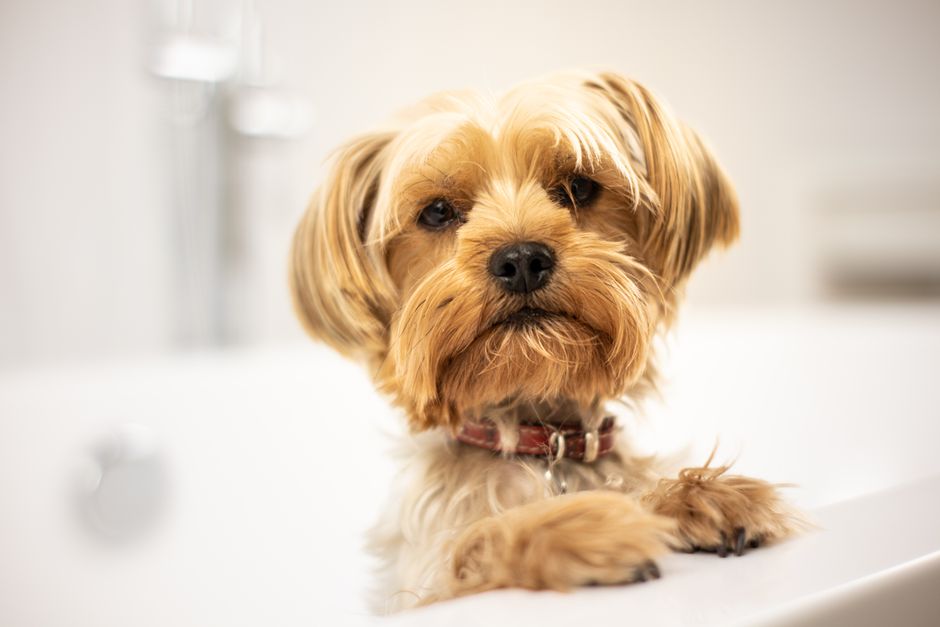
The midnight scratch. The constant licking of paws. Then bath time arrives and your dog looks miserable before the water is even running. Dogs with sensitive skin and allergies react to far more than the dirt they carry in from the yard, and the shampoo sitting in your tub may be part of the problem. Choosing a dog shampoo for sensitive skin comes down to reading the label with more care than most shoppers do and matching the formula to what is actually irritating your dog.
This guide walks through the signs of reactive skin, the ingredients that show up again and again in gentle formulas, the products that appear in published roundups, and the questions worth asking your veterinarian before you buy another bottle.
Signs Your Dog’s Skin Needs a Gentler Approach
Sensitive skin does not always look dramatic. Sometimes it is a dog who scratches through the evening, or one who chews at a paw until the fur is stained. The concerns most often described in sensitive-skin shampoo guides are itching, redness, flaky patches, and general irritation that makes bath time stressful for the dog and the owner alike.
Watch for these patterns between baths:
- Scratching that picks up in the evening or after a bath
- Constant licking or chewing at the paws and legs
- Visible redness on the belly, armpits, or groin
- Flaky patches or a dull, dry coat
- Restlessness or discomfort right after being washed
If a dog itches just as much after a bath as before it, the shampoo is a reasonable suspect. That is especially true when the itching began or worsened after you switched products.
What Makes a Shampoo Gentle Enough for Sensitive Skin
The formulas most often recommended for dogs with reactive skin share a short list of traits: they are mild, fragrance-free, and soap-free, with soothing ingredients layered in to calm irritation rather than simply strip away dirt. That combination is the practical starting point for almost any dog with a history of skin trouble.
Mild, fragrance-free, and soap-free first
A gentle surfactant system cleans without leaving the skin tight and dry, which matters because a dog with sensitive skin has less room for error than a dog with a cast-iron coat. Fragrance-free formulas cut out one common source of reaction. Soap-free formulas tend to be kinder to the skin barrier. Look for these three words on the label before you look at anything else, and treat a strong perfumed scent as a reason to keep reading.
Soothing ingredients second
Once the base formula passes the mild test, the soothing ingredients decide whether the shampoo actually helps. Oatmeal appears in nearly every sensitive-skin discussion, and it is frequently paired with aloe vera, chamomile, and coconut oil. Tea tree oil also shows up on lists of key ingredients for dogs with sensitive, itchy skin. One gentle wash described in the research packs colloidal oatmeal, aloe, chamomile, and manuka honey together, aimed at itch and dryness without harsh soaps.
| Ingredient | Why it appears in sensitive-skin formulas |
|---|---|
| Colloidal oatmeal | Soothing and moisturizing for itchy, dry skin |
| Aloe vera | Calming support for irritated skin |
| Chamomile | Gentle botanical used in extremely sensitive-skin formulas |
| Coconut oil | Conditioning ingredient in soothing washes |
| Manuka honey | Paired with oatmeal, aloe, and chamomile in a gentle wash |
| Tea tree oil | Listed among key ingredients for sensitive, itchy skin |
Ingredient lists tell you what is inside, not how a specific dog will respond. Even a thoughtful formula can disagree with an individual animal, which is why a patch test or a slow introduction is worth the extra day.
Formulas That Appear in Sensitive-Skin Roundups
Several names come up repeatedly in published picks for reactive skin. Pure Paws Sensitive Skin Shampoo is built on a mix of chamomile and oatmeal and is positioned for extremely sensitive skin. Burt’s Bees Oatmeal Shampoo is described as using natural ingredients, pH balanced and gentle. Earthbath Hypo-Allergenic Dog Shampoo is described as tearless and fragrance-free, and one roundup named it the best overall fragrance-free routine shampoo. The same roundup pointed to Veterinary Formula as a budget-friendly hypoallergenic option.
None of these is guaranteed to suit every dog. What the list shows is a pattern: oatmeal, chamomile, and hypoallergenic bases dominate the conversation because those are the formulas groomers and reviewers keep returning to for dogs who react to everything else.
Match the Shampoo to the Cause, Not Just the Symptom
Which shampoo is best depends on why the dog is sensitive in the first place. The cause of the sensitivity, the coat type, and any allergies involved all shift the answer. A dog with dry, flaky skin and a dog with allergy-driven irritation may both itch, but they do not need the same bottle.
That is why a shampoo alone is rarely a complete answer. If your dog’s itching follows a seasonal pattern, flares after walks in certain areas, or shows up alongside paw licking and ear trouble, the shampoo is a comfort measure rather than a fix. Your veterinarian can help sort out whether you are dealing with dryness, an allergy, or something else entirely.

How to Bathe a Dog With Sensitive Skin
Technique matters almost as much as the product. A careful bath reduces the chance that a good shampoo still leaves your dog uncomfortable.
- Brush out loose fur and any mats before the water starts, since mats hold shampoo against the skin.
- Use lukewarm water. Hot water adds to irritation.
- Dilute or lather the shampoo in your hands first so it spreads evenly instead of landing in one concentrated spot.
- Work around the face, eyes, and ears rather than scrubbing through them, and use a tearless formula if your dog is wriggly.
- Rinse longer than feels necessary. Residue left in the coat is a common reason a dog itches after a bath.
- Towel dry thoroughly and keep the dog warm until the coat is dry.
How often to bathe is a question for your veterinarian, since it depends on the skin condition and the coat. More frequent washing with the wrong product can make a sensitive dog worse, not better. If you bathe often, a mild fragrance-free formula matters even more.

When to Stop Experimenting and Call Your Veterinarian
Shampoo handles surface comfort. It does not diagnose allergies, treat infections, or replace a proper skin exam. Book a visit if the itching is constant, if the skin is broken, red, or smells unpleasant, if hair loss is spreading, or if a new formula makes things worse rather than better. Bring the ingredient list of whatever you have been using. That detail helps more than a description of the bottle.
The same advice applies before you try anything outside the mild, fragrance-free, soap-free lane. A product marketed for a specific condition may be exactly right, or it may be too strong for daily use, and the label is not always clear about which. Your veterinarian knows your dog’s history and can tell you what to avoid.
Frequently Asked Questions
Can I use human shampoo on my dog?
The sources reviewed for this guide do not settle that question, and the answer can vary from dog to dog. What is clear is that the formulas most often recommended for dogs with reactive skin are mild, fragrance-free, and soap-free, which is not how most human shampoos are built. Ask your veterinarian before substituting a human product on a sensitive dog.
Which shampoo is best for a dog with itchy skin?
There is no single best pick, because the answer depends on the cause of the sensitivity, the coat type, and any allergies involved. Formulas built around colloidal oatmeal, aloe vera, and chamomile are the ones most often suggested for itchy, dry skin. If the itching is constant or the skin looks damaged, have your veterinarian examine it before you keep buying bottles.
Why do so many sensitive-skin shampoos skip fragrance?
Fragrance-free is one of the traits shared by the formulas most often recommended for dogs with reactive skin, along with mild and soap-free. Scent is not the only possible trigger, but starting with a formula that leaves it out reduces the number of things that could set off a reaction, which makes it easier to judge whether the shampoo is helping.
What helps a dog with flaky, dry skin?
Colloidal oatmeal appears repeatedly in formulas described as soothing for dry, flaky, itchy skin, and it is often paired with aloe vera, chamomile, or coconut oil. A gentle wash that moisturizes while it cleans is a reasonable starting point. Persistent flaking can have causes beyond simple dryness, so raise it with your veterinarian if it does not improve.
How do I know if a shampoo is irritating my dog?
Watch the hours right after a bath. If itching, redness, or restlessness picks up after washing and settles in between, the shampoo has moved to the top of the suspect list. Stop using it, note the ingredients, and check with your veterinarian before trying something new so you can compare formulas rather than guess.