
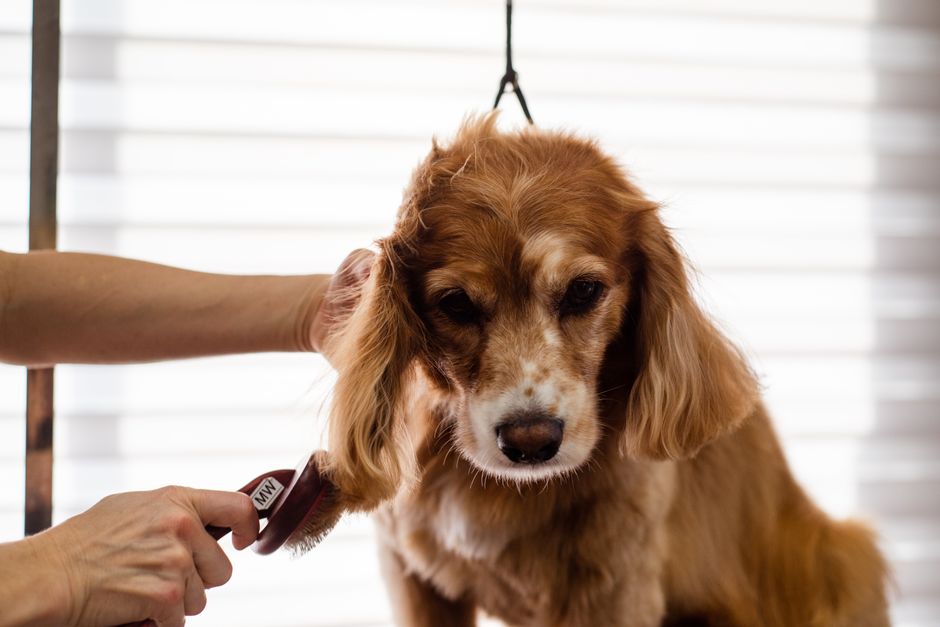
Shedding season has a way of making a house feel like it is slowly being upholstered in fur. It shows up on the couch, in the car, along the baseboards, and somehow inside the fridge. The good news is that a real de-shedding treatment for dogs is not a mystery product or a one-time miracle. It is a combination of the right tool, a repeatable routine, and a bath step most owners skip. The less good news is that plenty of products sold as de-shedding treatments do little more than move loose hair from the dog to the floor.
This guide breaks down what a de-shedding treatment actually is, which tools carry the workload, and how to build a routine you can keep up with when your dog is blowing coat.
What Counts as a De-Shedding Treatment
Most de-shedding treatments sold for dogs fall into one of four buckets: a grooming tool, a shampoo, a grooming routine, or a diet adjustment. Understanding which bucket you are shopping in keeps you from buying the same thing twice under different names.
- Tools reach into the coat and lift loose undercoat fur and mats before it lands on your furniture.
- Shampoos support the bath step, where warm water and massaging help release trapped fur.
- Routines combine brushing, de-shedding, bathing, and drying in a specific order.
- Diet and coat care support the coat from the inside, which affects how much hair loosens in the first place.
A single product rarely covers all four. The owners who see the biggest drop in loose hair are usually the ones stacking a tool, a shampoo, and a consistent schedule rather than relying on one item.
Start With the Coat Your Dog Actually Has
Coat type decides your routine more than any product label does. Dogs with double coats need a different rhythm than short-coated dogs, and long-haired dogs need extra attention to mats and tangles before anything else happens.
A workable grooming rhythm for double-coated dogs looks like this: daily brushing to keep surface hair under control, weekly de-shedding to pull the loosening undercoat, and monthly bathing to reset the coat. That three-tier schedule appears repeatedly in grooming guidance for heavy shedders, and it works because each step handles a different layer of the problem. Daily brushing is maintenance. Weekly de-shedding is the deep clean. Monthly bathing is the reset.
If your dog has a shorter coat, you can often lean on daily brushing and a rubber curry brush during baths, with de-shedding tools used more lightly. Long-haired dogs need a grooming brush that clears mats and tangles first, because a de-shedding tool dragged through a matted coat is a bad experience for everyone involved.
The Tools That Do the Heavy Lifting
Undercoat de-shedding tools
These are the workhorses of shedding season. A dedicated undercoat de-shedding tool lifts loose undercoat fur and mats out of the coat rather than just smoothing the top layer. They are especially useful on long-haired dogs and heavy shedders, where the undercoat traps a surprising volume of fur that a standard brush glides right over.
De-shedding kits that bundle a tool and shampoo
Kits take the guesswork out of matching a tool to a bath product. A de-shedding kit typically pairs a de-shedding tool with a de-shedding shampoo, which covers two steps of the routine in one purchase. If you are starting from zero and do not want to research each piece separately, a kit is the simplest entry point.
Rubber curry brushes
The humble rubber curry brush does two jobs. It works shampoo deep into the coat during bath time, and it collects loose hair on shorter coats without scratching skin. Keep one in the tub and one in the grooming bin if your dog sheds heavily.
An everyday brush for maintenance passes
You still need a basic brush for the daily pass. A grooming brush that clears mats and tangles keeps the coat workable between de-shedding sessions, and it means your weekly de-shedding tool is not fighting through knots.
| Tool | What it handles | Where it fits |
|---|---|---|
| Undercoat de-shedding tool | Lifts loose undercoat fur and mats, suited to long-haired and double-coated dogs | Weekly de-shedding step |
| De-shedding kit (tool plus shampoo) | Covers both the tool and the bath product in one purchase | De-shedding and bath steps |
| Rubber curry brush | Massages shampoo into the coat and collects loose hair on short coats | Bath step |
| Everyday grooming brush | Clears mats and tangles, keeps the coat workable | Daily brushing |
The Five-Step De-Shedding Routine
The order matters more than people expect. Working in this sequence means the bath does not get clogged with fur you could have removed with a brush, and the tool is not fighting mats that should have been cleared first.
- Brush. Run your everyday brush over the whole dog to clear surface hair, mats, and tangles. Do not skip the legs, tail, and behind the ears.
- De-shed. Work the undercoat de-shedding tool through the coat in the direction of hair growth, section by section. Go gently over bony areas and sensitive skin.
- Repeat. Go back over the coat. A second pass usually pulls more fur than the first, because the tool has loosened undercoat that was sitting tight.
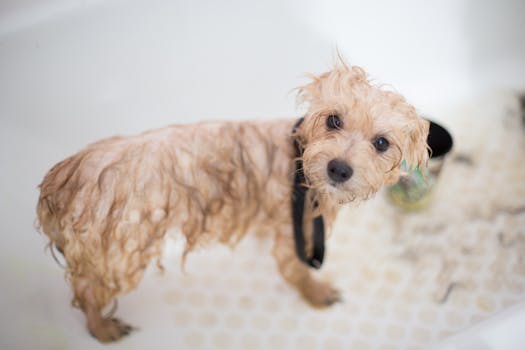
- Bath time. Bathe with a de-shedding shampoo, working it deep into the coat. Warm water helps open the hair follicles and release trapped fur, and a rubber curry brush helps work the lather down to the skin.
- Dry. Dry the coat thoroughly. A damp undercoat left to sit is uncomfortable for the dog and defeats the point of the bath.
Bathing Is the Step Most Owners Skip
Brushing alone removes what is already loose near the surface. Bathing does something different. Warm water naturally opens the hair follicles and releases trapped fur, which is why a bath often produces a startling amount of shed hair even after a thorough brushing session.
The technique matters. Use a de-shedding shampoo, massage it deep into the coat with a rubber curry brush rather than just smoothing it over the top, and give it enough time to work. A nourishing shampoo supports coat condition at the same time. Rinse completely, because leftover shampoo residue is uncomfortable and works against the coat you are trying to improve.

How Often Should You De-Shed?
For double-coated dogs, weekly de-shedding paired with daily brushing and monthly bathing is a rhythm that holds up through shedding season. Outside of heavy shedding periods, you can often stretch the de-shedding sessions out and lean more on daily brushing.
Watch the brush instead of the calendar. If your de-shedding tool is coming back nearly empty, you can space sessions further apart. If it is loading up every few strokes, your dog needs more frequent sessions. During a heavy coat blow, some owners go twice a week until the volume drops.
Support the Coat From the Inside
Grooming removes hair that has already loosened. Diet influences how much loosens in the first place. A high-quality diet rich in omega fatty acids is one of the standard recommendations for minimizing shedding beyond brushing, and it supports skin and coat condition generally. Regular baths with a gentle dog bath brush and a nourishing shampoo round out the coat care side of the equation.
If your dog is losing hair in patches, itching persistently, or showing bare spots rather than general shedding, that is a veterinary question and not a grooming one. Coat condition changes with an underlying cause deserve a professional look before you buy another tool.
What a De-Shedding Treatment Will Not Do
No treatment stops shedding, because shedding is normal coat turnover. What a good routine does is concentrate the loose hair in your brush and your tub instead of your floors. Some tools are marketed with dramatic numbers, such as reducing shedding by 95 percent. Treat figures like that as best-case product claims rather than a guarantee, and judge any tool by what it collects over a few weeks of consistent use on your own dog.
Building a Shedding Season Kit
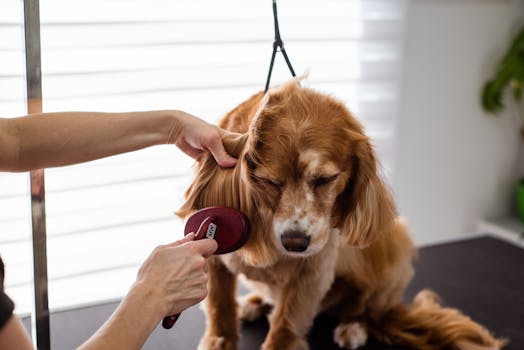
A complete kit is smaller than most people expect: an everyday brush for daily passes, an undercoat de-shedding tool for weekly sessions, a de-shedding shampoo for bath day, and a rubber curry brush for working lather into the coat. Add a dedicated drying towel and you have everything the five-step routine calls for.
If you would rather not assemble the pieces individually, a de-shedding kit bundles the tool and shampoo together. The Red Dog Shop grooming section carries brushes, de-shedding tools, shampoos, and bath gear alongside everyday dog supplies, so the routine pieces can come from one place. Match the tool to your dog’s coat type, keep the schedule realistic, and expect the biggest change to show up around week two or three, once the loosened undercoat is genuinely cleared out.
Frequently Asked Questions
Do de-shedding treatments stop a dog from shedding completely?
No. Shedding is normal coat turnover, so no tool or shampoo halts it. A de-shedding treatment concentrates loose fur in your brush and tub instead of your floors. Expect a real reduction in loose hair around the house, not a fur-free dog, especially during a heavy seasonal coat blow.
How often should I use a de-shedding tool on a double-coated dog?
Weekly de-shedding works well for double-coated dogs, paired with daily brushing and monthly bathing. During peak shedding season, some owners increase to twice a week until the volume drops. Let the tool guide you: if it loads up quickly, your dog needs more frequent sessions.
Should I brush or bathe first when de-shedding?
Brush first, then de-shed, then bathe. Brushing clears surface hair and mats so the de-shedding tool can work properly, and bathing afterward releases trapped fur with warm water. Doing it in this order keeps your drain clearer and makes the bath step far more productive.
Can diet reduce how much my dog sheds?
Diet supports coat condition but does not eliminate shedding. A high-quality diet rich in omega fatty acids is a standard recommendation for minimizing shedding beyond brushing. Pair it with regular baths using a gentle brush and nourishing shampoo for the best overall coat results.