
A good grooming kit is less about having every gadget and more about having the right handful of tools that match your dog’s coat. The 2026 catalogs reflect that: brush sets, clipper kits, and dryers are being sold both as individual pieces and as bundled sets, and the choices have widened rather than narrowed. What follows is a plain breakdown of what each tool does, where it fits into a grooming routine, and what to check before you spend money on it.
Start With the Core Tool List
Professional grooming supply sources tend to agree on a minimum kit, and it is shorter than most people expect. The essentials cover coat care, bathing, and nails. Everything beyond that is refinement or convenience.
- A clipper or trimmer for coat length and touch-ups
- A slicker brush for loosening surface debris and light tangles
- A comb for checking your work and separating coat
- Dog-safe shampoo and conditioner
- Nail clippers
- Detangling tools for long-haired breeds
That list is the baseline. Shears, dryers, grooming tables, and tubs sit in the next tier up, and they matter more for certain coat types and for anyone grooming regularly rather than occasionally. If you are shopping a single set, many kits cover the minimum list in one box, while others go further and include the cutting tools as well.
Brushes and Combs
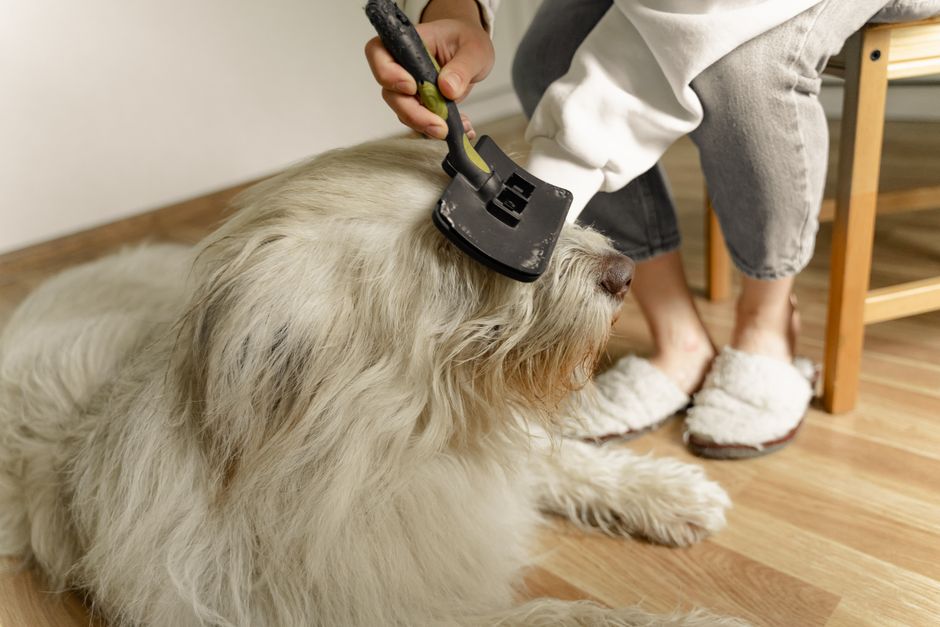
Brushes do the everyday work. They remove loose hair, lift dirt, and prevent small tangles from turning into matted patches that have to be cut out. A slicker brush is the most commonly recommended starting point because it handles a wide range of coat lengths without being specialized.
Slicker Brushes
A slicker brush uses fine, angled pins set into a flat or slightly curved head. It is the tool most grooming lists name first, and it works well as a general-purpose brush for routine sessions. Use light strokes in the direction the coat grows, and work in small sections rather than dragging the brush across the whole dog at once. Sensitive areas like the belly, armpits, and behind the ears need a gentler hand.
Combs and Detangling Tools
A comb is the quality check. Running a comb through the coat after brushing shows you where tangles remain that the brush passed over. For long-haired breeds, detangling tools are listed as a separate need, which makes sense: a slicker brush alone often is not enough to work through longer, finer coat. Keep a comb in the kit even if you rarely use it as the primary tool.
Clippers and Trimmers
Clippers and trimmers are where buyers face the most options. Cordless, rechargeable designs with multiple attachments have become a standard configuration, and comprehensive kits pair clippers with brushes and accessories in a single package. That convenience is real, but it also means reading the contents list rather than trusting the box photo.
Corded, Cordless, and Kits
Cordless clippers suit people who groom in different spots or who have a dog that will not stand still near an outlet. Corded models avoid battery concerns entirely if you always groom in the same place. Multi-attachment kits let one unit handle different coat lengths, which is useful if you have more than one dog or want flexibility in how short you go. Check what attachments are actually included before assuming a kit covers your needs.
Shears and Finishing Work
Grooming shears are the scissors of the trade, used for shaping, trimming around feet and face, and finishing work. They appear in professional supply ranges alongside brushes, stencils, and creative grooming gear. If you are not confident with scissors near skin, leave shaping to a professional and keep your shears for small, controlled trims.

Dryers
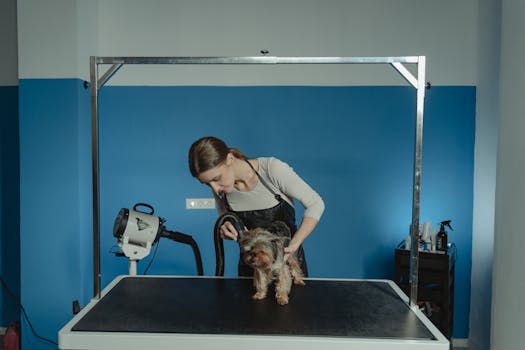
Dryers are the piece most home groomers skip and later wish they had not. A dog dryer moves air at volume to dry the coat after a bath, which matters for thick or double coats that hold moisture close to the skin. Pet dryers appear in professional supply ranges next to grooming tables, tubs, and cages, which tells you they are treated as core salon equipment rather than an optional extra.
Before buying, confirm the noise level and heat settings suit your dog. Some dogs tolerate a dryer easily and others find the sound stressful, so introduce it gradually and keep sessions short at first. Also check that the unit is rated for animal use rather than repurposed household equipment, and follow the manufacturer’s guidance on distance and drying time.
Nail Clippers and the Small Extras
Nail clippers round out the minimum kit. They are small, relatively inexpensive, and easy to overlook until nails get long. Pair them with a comb, a slicker brush, and dog-safe shampoo and conditioner, and you have the full essential list covered.
The extras are where grooming ranges get creative. Professional supply catalogs carry bows, bandanas, stencils, and creative grooming gear alongside the practical tools. None of these are necessary, but they explain why the category looks so much larger than the core list suggests.
Build a Kit or Buy a Set?
Both approaches work, and the choice comes down to how much control you want over each piece.
| Approach | What You Get | Best For |
|---|---|---|
| Pre-built kit | Brushes, combs, and nail clippers in one set, sometimes with clippers and accessories included | First-time buyers who want the basics settled in one purchase |
| Individual pieces | Each tool chosen to suit your dog’s coat and your routine | Owners with a specific coat type or an existing partial kit |
Some kits contain just the basics, including brushes, combs, and nail clippers. Others contain all the tools needed to cut the coat as well. If you already own a decent brush and comb, buying individual pieces usually makes more sense than duplicating what you have.
Salon-Style Equipment at Home
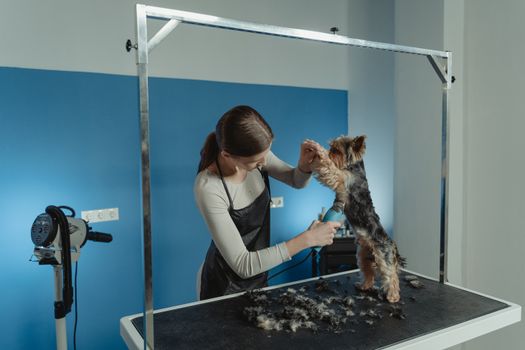
Grooming tables, tubs, and dryers are the equipment that separates a home setup from a salon setup. Wholesale suppliers stock all three, along with cages and cage banks, because professional groomers need a fixed station. At home, the value depends on your dog’s size and how often you groom. A table that holds the dog at a comfortable working height saves your back during longer sessions, and a proper tub makes bathing manageable for larger breeds. Buy only what your routine will actually use.
What to Check Before You Buy
- Coat type match: confirm the brush or blade is intended for your dog’s coat length and texture
- Kit contents: read the full list of included attachments rather than relying on the product image
- Power source: decide between corded and rechargeable cordless before comparing models
- Noise and heat: relevant for dryers, especially with nervous dogs
- Replacement parts: check that blades, pins, or attachments can be sourced later
Where a product listing does not state compatibility or included accessories clearly, verify with the seller or manufacturer before ordering. Coat type is the single biggest factor in whether a tool works well, and no kit is universal across every breed.
Where to Shop for Dog Grooming Tools
Grooming tools are sold across a wide range of retailers. Dedicated grooming suppliers and wholesale distributors stock professional-grade equipment, kit bundles, and salon furniture. General home and hardware retailers also carry pet grooming tools, and larger marketplaces list extensive grooming kit ranges with many options in a single category. For everyday brushes, combs, shampoo, and nail clippers, the mainstream retail channel is usually sufficient. For dryers, shears, and tables, a specialist supplier is the more likely source.
Red Dog Shop carries grooming tools as part of its dog supplies range, alongside toys, treats, beds, crates, and feeding gear, so the grooming basics can be picked up in the same place as the rest of your dog’s kit. Match the tools to your dog’s coat, buy the essentials first, and add the dryers and shears once the routine is established.
Frequently Asked Questions
What tools do I need at minimum to groom my dog?
The commonly cited minimum is a clipper or trimmer, a slicker brush, a comb, dog-safe shampoo and conditioner, and nail clippers. Long-haired breeds also need detangling tools. That set covers coat care, bathing, and nails. Shears, dryers, tables, and tubs are useful additions but are not part of the basic list most grooming sources recommend.
Are cordless clippers good for home grooming?
Rechargeable cordless clippers with multiple attachments are widely sold in grooming kits and are a practical choice for home use, since you are not tied to an outlet. The trade-off is battery dependence. If you always groom in one spot and want to avoid charging, a corded unit is the simpler option. Check the included attachments before buying either type.
Do I really need a dog dryer?
It depends on the coat. Thick or double coats hold moisture close to the skin, and a proper dog dryer moves enough air to dry that layer. Pet dryers are standard equipment in professional grooming setups, listed alongside tables and tubs. For short coats or infrequent baths, a towel dry may be adequate. Always check the unit is rated for animal use.
Should I buy a grooming kit or individual tools?
Pre-built kits suit first-time buyers because they settle the basics in one purchase, and some include cutting tools as well as brushes and combs. If you already own a decent brush and comb, or your dog has a specific coat type, buying individual pieces gives you more control and avoids duplicating tools you will not use.
How do I know which brush suits my dog’s coat?
Match the brush to coat length and texture, and start with a slicker brush for general-purpose work since it is the most commonly recommended first brush. For long-haired breeds, add detangling tools and a comb to check for remaining tangles. When a listing does not state what coat type a tool suits, confirm with the seller before ordering.