
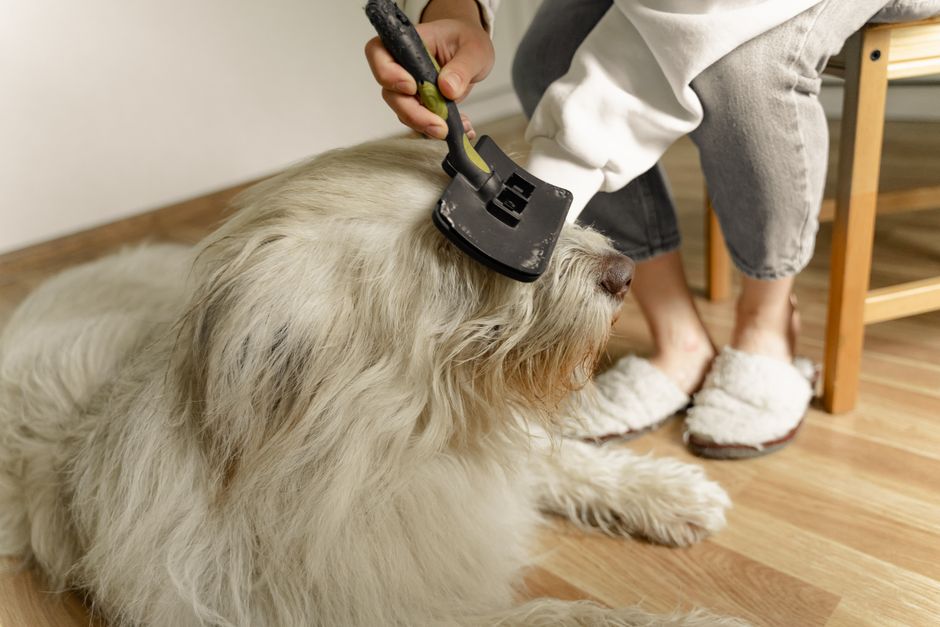
Fur on the couch, fur on the rug, fur drifting across the kitchen floor. Shedding is normal, but the size of the pile you sweep up depends a lot on which tool is in your hand. The right dog brush for shedding does two jobs at once: it lifts loose hair before it lands on your furniture, and it keeps the coat and skin in decent condition. The wrong brush, or a good brush used the wrong way, can leave you with a dull coat and a dog who walks off halfway through the session.
This match-up starts with the coat in front of you, then pairs that coat with the brush styles actually sold for shedding work. No fantasy tool that suits every dog, and no brand names you cannot find on a shelf.
Start With the Coat, Not the Brush
Before you compare handles and bristles, look at what your dog is wearing. Coat type decides almost everything about which tool will work and which will just slide over the top.
- Short, smooth coats shed short hairs that weave into fabric and cling to car seats.
- Double coats carry a soft undercoat beneath a longer outer coat, and that undercoat is what comes out in volume.
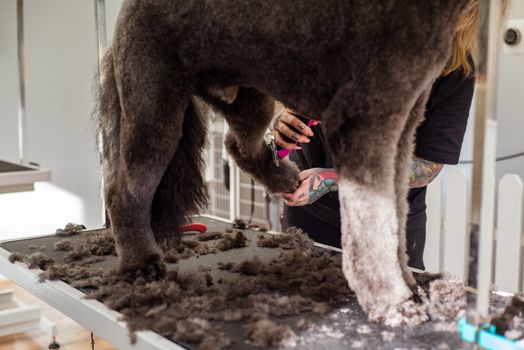
- Long coats tangle and mat if loose hair stays trapped near the skin.
- Curly and wire coats need tools that separate hair rather than just skim the surface.
The good news is that most shedding tools are sold in versions for different coat lengths, and the research behind the popular picks follows the same logic. Slicker brushes, for example, are recommended for medium-coated, long-coated, wire-coated, and curly-coated dogs, where they remove mats and help prevent new ones from forming.
The Main Shedding Brush Types and What Each One Does
Five tool families cover most of the shedding work you will ever do. Each has a job it does well and a coat it suits better than the rest.
De-shedding tools
This is the category most people mean when they search for a dog brush for shedding. In testing, the FURminator Original deShedding Tool came out ahead of a long list of imitators, and the line includes models for long hair and for short hair. Palm-friendly de-shedding brushes are built specifically for double-coated dogs, and their ergonomic shape is designed to reduce wrist strain during the longer sessions that heavy shedders demand. If your dog blows coat twice a year and leaves tumbleweeds in the hallway, start your research here.
Slicker brushes
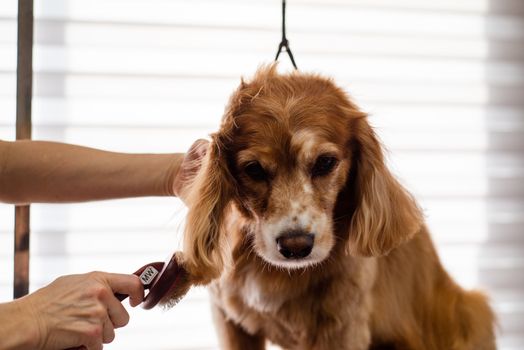
Slicker brushes do more than detangle. They are the tool for medium, long, wire, and curly coats, lifting mats out and keeping new ones from forming. They also handle short hair better than their reputation suggests: the Hertzko Self-Cleaning Slicker Brush worked best on both long-haired and short-haired dogs in one round of testing, which says a lot about how flexible a well-made slicker can be. Self-cleaning versions eject the collected hair with a click, and that convenience matters when you are brushing every day during a heavy shed.
Shedding combs
Safari Shedding Dog Combs are designed to reduce shedding and remove loose hair from all coat types. Two details are worth knowing if your dog fidgets when metal comes near the skin: the teeth rotate, and they are long and rounded. A comb also makes a good finishing pass after a de-shedding tool, catching the stragglers that a wider tool skips over.
Rakes and shedding blades
Deshedding brushes, rakes, and combs are all sold as tools that help reduce loose fur, minimize shedding, and maintain a healthy coat. That is a broad promise for a broad category, so the differences come down to design. A shedding blade such as the Frisco Shedding Blade Dog Brush comes in a single size and carries a 4.4 out of 5 star rating across 494 reviews. Blade-style tools vary in how they are meant to be used, so read the maker’s directions before you run one down your dog’s back.
Palm brushes and everyday tools
Not every session needs to be a full de-shed. A palm-friendly brush keeps your hand close to the coat and works nicely for quick daily passes, and Tangle Teezer sells a de-shedding brush built around that same palm-friendly shape. Self-cleaning shedding brushes are also marketed as skin friendly grooming tools for dogs, cats, and puppies, with hair removal for long and short haired pets. These are the tools you reach for on a Tuesday night when you have five minutes, not the ones you build a grooming routine around.
Match-Up Table: Coat Type to Brush
| Coat type | Brush to reach for first | Why it fits |
|---|---|---|
| Double coat (undercoat plus outer coat) | De-shedding tool, including palm-friendly models | Designed for double-coated dogs and for the longer sessions they require |
| Short, smooth coat | Self-cleaning slicker or shedding blade | Slickers tested well on short-haired dogs; blades come in single-size formats |
| Long coat | Slicker brush, then shedding comb | Slickers remove mats and prevent new ones; combs pick up what is left |
| Curly or wire coat | Slicker brush | Listed among the coats slickers are meant to serve |
| Mixed or unknown coat | Shedding comb rated for all coat types | Rotating teeth and long rounded teeth suit general loose-hair removal |
What About the “Reduces Shedding by Up to 95 Percent” Claim?
Some grooming tools advertise shedding reductions of up to 95 percent. Treat figures like that as manufacturer claims rather than measured outcomes on your dog. The more useful signals sit in plain sight: star ratings and review counts such as 4.4 stars from 494 reviews, whether the tool comes in versions for long and short hair, and whether the maker explains how often the tool should be used. A brush with a modest claim and clear directions usually serves you better than a dramatic number with no instructions attached.
Handle and Comfort Matter More Than You Think
Brushing a heavy shedder is a physical job, and your hands pay for a poorly shaped handle. That is why ergonomic design shows up across so many shedding tools. Palm-friendly brushes keep the tool tucked into your grip, and their shape is intended to reduce wrist sprain during extended brushing. Self-cleaning mechanisms, rotating comb teeth, and rounded tooth tips all reduce the little frictions that make a dog squirm and an owner quit early.
A ten minute session with a comfortable tool beats a two minute session with one that pinches your hand. Consistency removes more loose hair than force ever will.
Building a Small, Sensible Kit
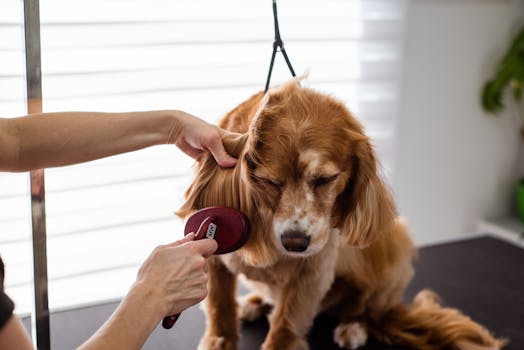
You do not need twelve brushes. Three or four tools cover everything from a daily tidy-up to the worst week of shedding season.
- A de-shedding tool sized to your dog’s coat length, for the heavy lifting.
- A slicker brush, self-cleaning if you can, for mat prevention and general coat care.
- A shedding comb with rotating, rounded teeth as a finishing pass.
- A palm-friendly brush or a shedding blade for quick sessions and short coats.
Store them together and check the teeth and blades for wear now and then. A rounded, intact tooth glides over skin. A damaged one catches it. When a tool starts snagging, replace it rather than working around the problem.
Frequently Asked Questions
What is the best brush for a dog that sheds a lot?
For double-coated dogs, a de-shedding tool is the usual starting point, and the FURminator Original deShedding Tool has come out ahead in testing against a crowded field of similar products. For short, long, curly, or wire coats, a slicker brush is a strong first buy. Many owners end up keeping both a de-shedding tool and a slicker on hand.
Do slicker brushes work on short-haired dogs?
Yes. Slicker brushes are commonly filed under long, medium, curly, and wire coats, but testing found the Hertzko Self-Cleaning Slicker Brush performed best on both long-haired and short-haired dogs. On a short coat, work with light strokes and let the bristles lift loose hair rather than pressing down hard against the skin.
What is the difference between a shedding comb and a de-shedding tool?
A de-shedding tool typically has a wider head and is aimed at reaching the undercoat in volume. A shedding comb such as the Safari Shedding Dog Combs uses rotating teeth with long rounded tips and is rated for all coat types. Many grooming routines use the tool first and the comb second to collect what remains.
Can I use a de-shedding tool on a curly-coated dog?
Curly and wire coats are usually matched with slicker brushes, which are listed among the tools for removing mats and preventing them from forming. A de-shedding tool is generally associated with double-coated dogs. If your dog has a curly coat with matting, follow the tool maker’s directions or ask a professional groomer before using a de-shedding blade or rake.
How often should I brush a shedding dog?
Frequency depends on coat type and season, and manufacturers usually print a recommended routine on the packaging. During a heavy shed, short daily sessions remove more loose hair than one long weekly session, and a comfortable handle makes that habit easier to keep. Check the label on your specific tool before you settle into a schedule.